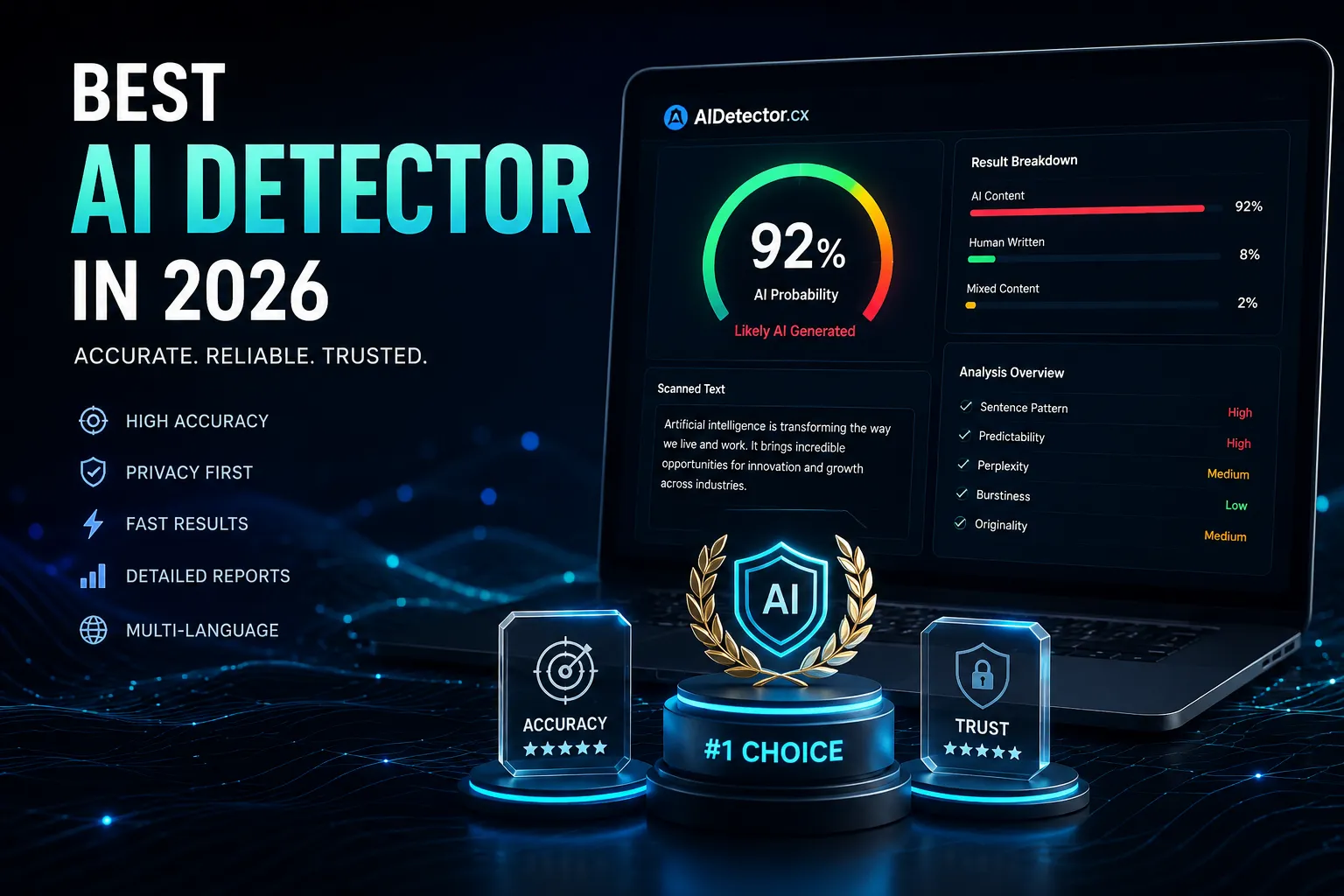
Perplexity Explained: How AI Scanners Look for Predictable Next-Word Choices

How many of you are familiar with the term perplexity, and are wondering if the literal meaning is what applies with one of the features of AI detectors. If this sounds unfamiliar with you, then I would advise you go through our previous articles, as little light has been shed on the aforementioned terminology, and it would help to widen your scope and understanding of the term and how it works.
It’s no doubt an important factor to not that the emergence of artificial intelligence has significantly increased work productivity, and also contributed to our efficient professionals work has been of late. However, the emergence has also paved way for the rise of AI detectors, which most students, researchers and professionals have adopted the use of it, to detect authenticity and evidence of ownership in whatever content they generate.
In as much as, the technology advancement has paved way for efficacy and productivity. It’s pertinent we understand the underlying mechanisms behind this technology; AI Detectors. For the aim of our discussion today, we would dive into one of the prominent features of AI Detectors, which is Perplexity. The term perplexity refers to sentence sequence of a writers work, and thus the underlying factor with which most AI detectors measure the probail of “AI Like “, in a situation where there’s lower perplexity determined after being, does not necessarily mean that the entire content was machine generated as opposed to human generated content, and in a situation where there’s higher perplexity determined does not also mean that the entire content was human generated as opposed to being machine generated. The main factor that should be considered is Ai detector should serve as a probabilistic test as opposed to a definitive evaluation.
The reason behind the aforementioned statement, is based on the fact that most AI Detectors are programmed based on certain factors such as dataset, sentence structure and other thresholds to carry out their evaluation, and these factors are not a total means to an end, this is because most times if one is reviewing their content on different AI detectors site, they get varying results and this does not mean that there’s an issue with the sites, however what it shows is that there are still incoherent results based on the fact that there’s no specific manual or scientific analysis that binds/ guides the measurement of this AI scanners, so the best thing that professionals should adopt is to stop obsessing over an AI Detector verdicts, because take for instance a professional that implores the use of any AI Language models to generate an entire essay writing is far different that makes use of AI Language model for brainstorming purposes, reviewing and editing their content is quite far apart, and if such people conduct AI detectors evaluation, their content might be flagged as being machine generated.
On that basis, like I mentioned above I would implore that writers are not obsessing over manipulating their content to fit into the criteria of AI detectors, but should rather have a clear documentation of their research, editing, reviewing and final work in cases whereby authenticity or authorship arguments arise.
Recommended Tools
Stay ahead of AI detection trends
Get the latest guides, research, and product updates from AIDetector.cx delivered to your inbox.